Ye, Ge, Zheng, Gao, Yu et al. (NVIDIA, 2026)
WoRV / MaumAI
1st Paradigm: Next-word prediction \rightarrow Language intelligence (LLMs)
2nd Paradigm: Next physical state prediction \rightarrow Embodied intelligence (World Models)
2026 will go down as the first year that Large World Models lay real foundations for robotics.
— Jim Fan, The Second Pre-training Paradigm (Fan 2026)
Commentary: “Language is a bottleneck, a scaffold, not a foundation” for physical intelligence.
How much data does each domain have?
LLMs: text from billions of people across history
Vision: images from billions of cameras over decades
Robotics: thousands of hours of teleoperation \rightarrow massive gap
In-the-wild vs. On-demand Data
Text and images are “in-the-wild” — generated continuously. Robot data is “on-demand” — requires expensive teleoperation.
You can’t teleoperate your way to the long tail.
— Joel Jang, World Models for Robotics (Jang 2026)
“Intelligence is a function of experience.”
\Rightarrow Robotics needs vastly more experience to match human-level physical intelligence.
Vision-Language-Action Models (VLAs):
But:
VLA from-scratch at $$0% on diverse data
Commentary: The fundamental gap — VLMs encode “what to do” but not “how to move”.
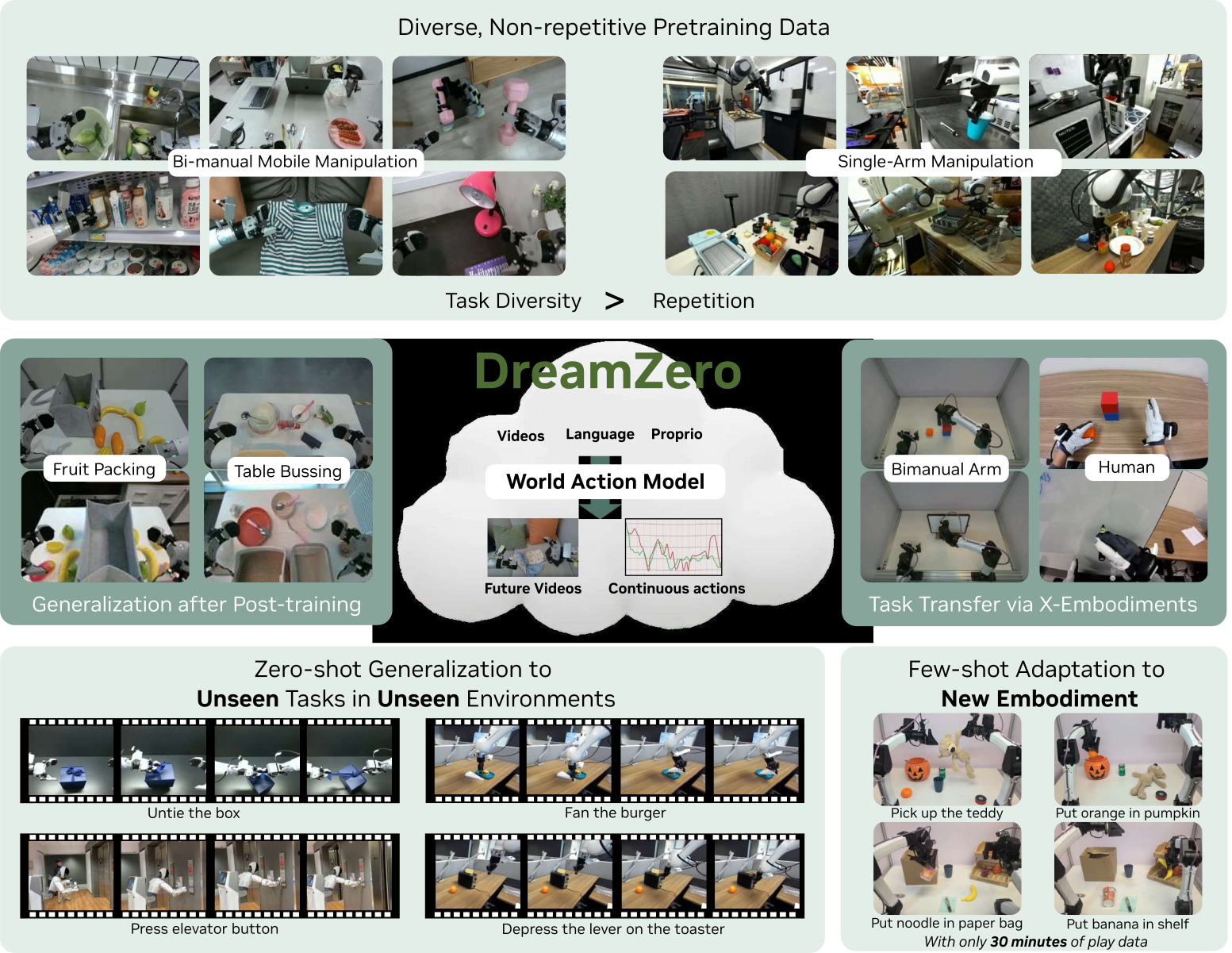
Core Idea
Video diffusion models trained on web-scale data encode: spatial geometry \cdot object dynamics \cdot contact physics \cdot motion patterns
Apes may not have good language models, but they surely have a robust mental picture of counterfactuals.
— Jim Fan, The Second Pre-training Paradigm (Fan 2026)
Commentary: This is the core paradigm shift — from discrete task policies to continuous world modeling.
WAM = Video Prediction \times Inverse Dynamics Model
\underbrace{P(\mathbf{O}, \mathbf{A} \mid \text{ctx})}_{\text{DreamZero}} = \underbrace{P(\mathbf{O} \mid \text{ctx})}_{\text{video pred.}} \times \underbrace{P(\mathbf{A} \mid \mathbf{O}, \text{ctx})}_{\text{IDM}}
IDM (Inverse Dynamics Model): observes a sequence of states and infers what actions caused those transitions — watching video and reverse-engineering motor commands.
Key Achievements
Humans are robots that have already been deployed at scale.
— Joel Jang, World Models for Robotics (Jang 2026)
The math:
The vision: “Train once on human experience, deploy everywhere with calibration”
Cross-Embodiment Transfer
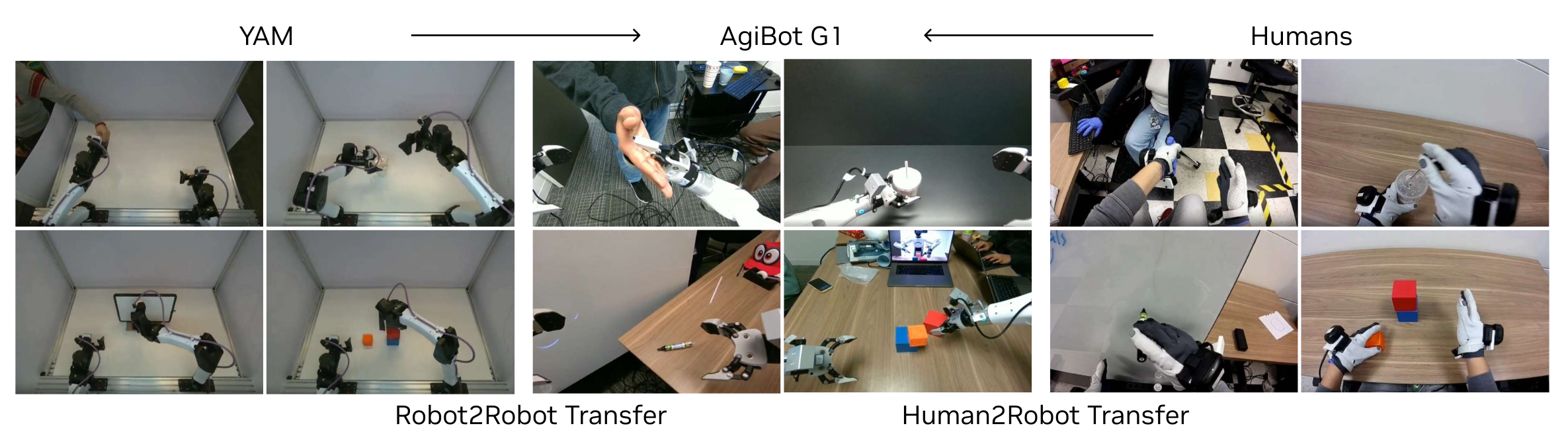
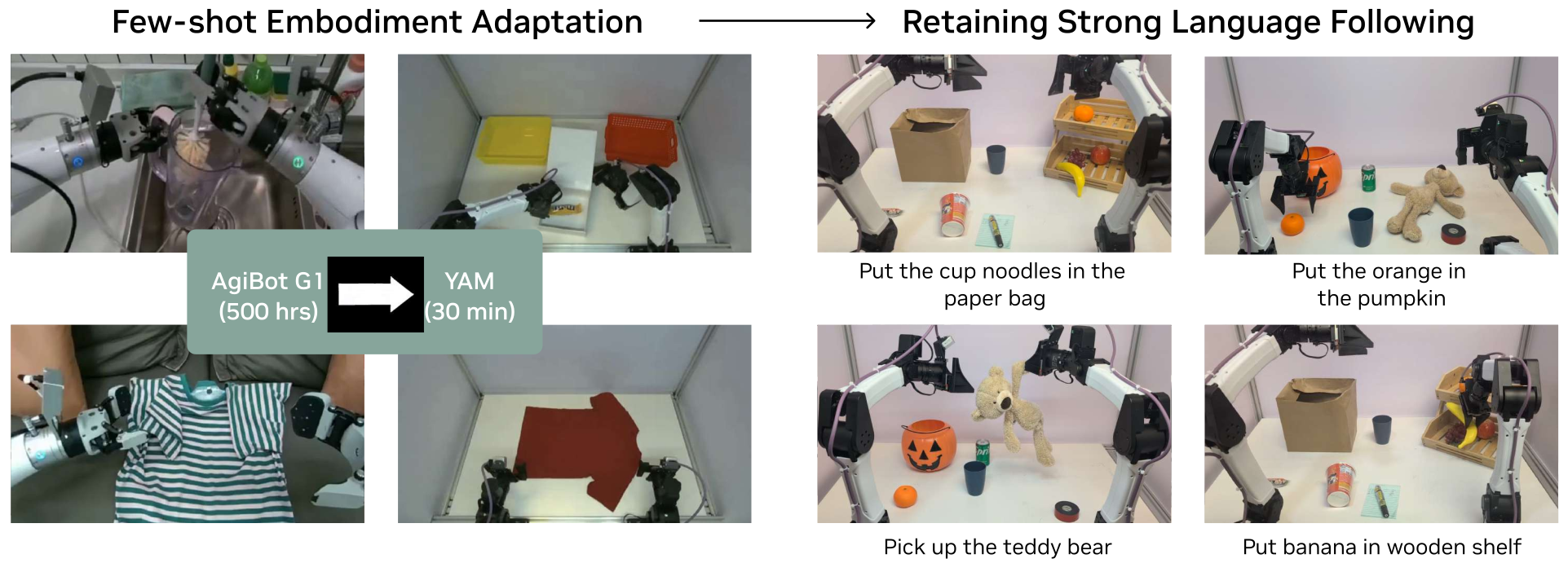
12 min of human egocentric video \rightarrow >42% relative improvement on unseen robot tasks
Commentary: This is the sleeper insight — human video as the ultimate robot training data.
Architecture & Training
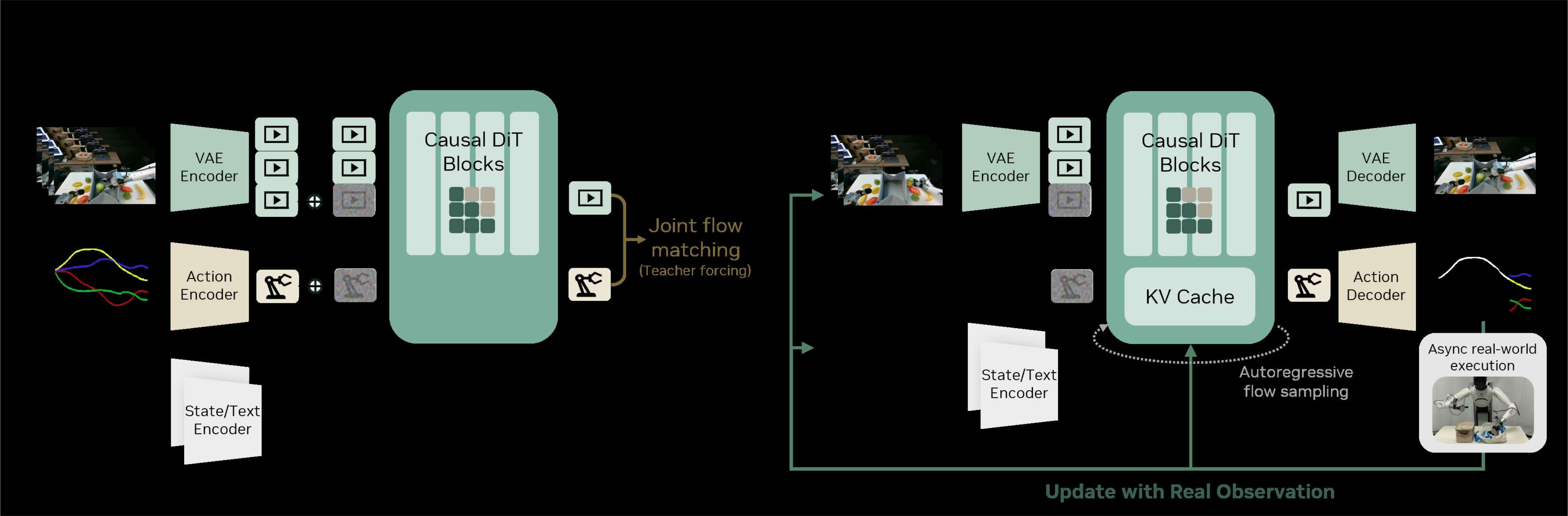
Inputs: Visual context (VAE) Language (text encoder) Proprioceptive state
Backbone: Autoregressive DiT (Diffusion Transformer) with flow matching
Outputs: Joint video frames + action chunks
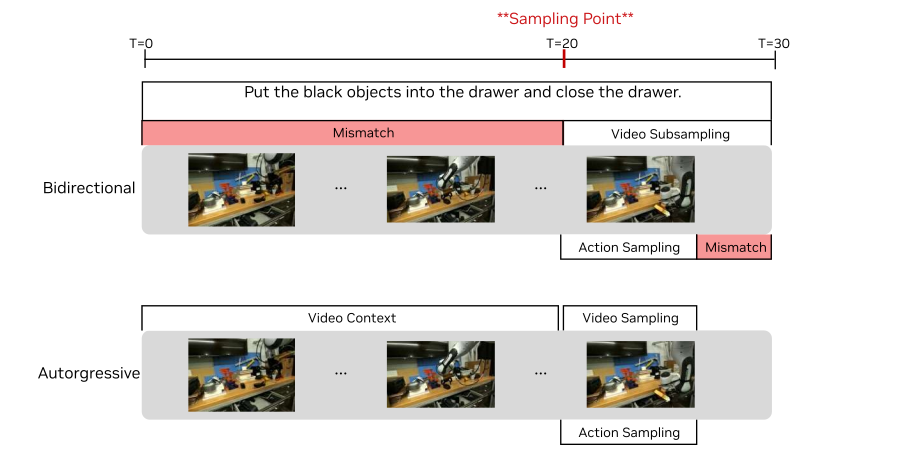
Bidirectional problems:
Autoregressive advantages:
Commentary: AR wins on both quality AND speed — KV-cache gives 3–4\times speedup (bidirectional cannot cache), and native frame rate preserves the temporal signal the IDM needs.
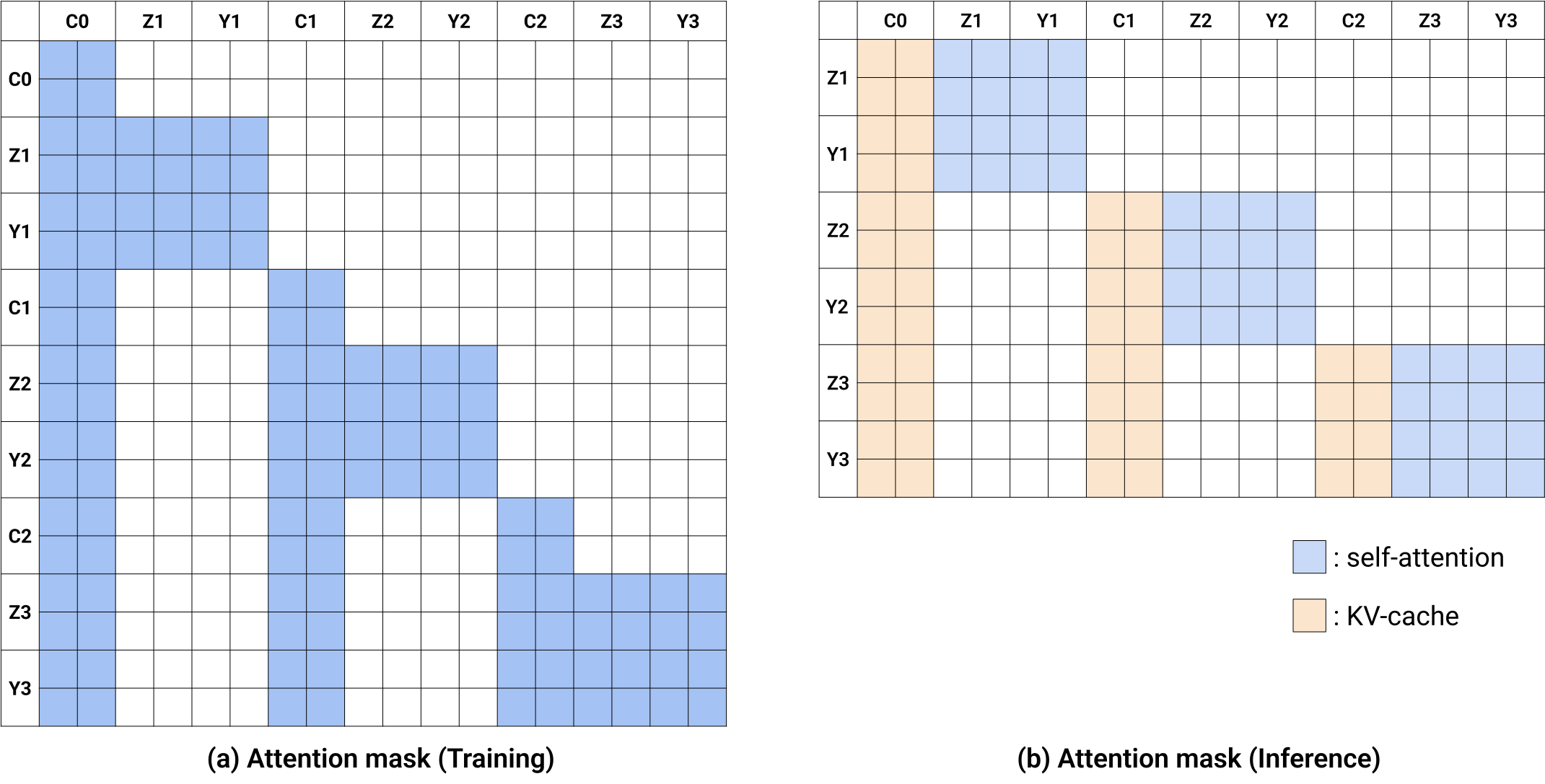
Chunking Strategy
Key design choices:
What is Flow Matching?
Learn a velocity field that transports noise to data along straight paths — simpler and faster than standard diffusion.
Analogy: Think of a GPS that plots a straight-line route from “lost” (noise) to “home” (data). Flow matching learns that route; standard diffusion takes a random walk.
Noisy interpolation:
\mathbf{z}_{t_k}^k = t_k \mathbf{z}_1^k + (1-t_k)\mathbf{z}_0^k, \quad \mathbf{a}_{t_k}^k = t_k \mathbf{a}_1^k + (1-t_k)\mathbf{a}_0^k
where \mathbf{z}_0^k, \mathbf{a}_0^k \sim \mathcal{N}(\mathbf{0}, \mathbf{I}) and t_k \in [0,1].
Velocity prediction loss:
\mathcal{L}(\theta) = \mathbb{E}\Bigg[ \frac{1}{K}\sum_{k=1}^{K} w(t_k) \Big\lVert \mathbf{u}_\theta(\cdots) - \mathbf{v}^k \Big\rVert^2\Bigg]
Key Symbols:
Teacher forcing: denoise noisy current chunk conditioned on clean previous chunks (like LLM training with ground-truth tokens).
Key Rules
The Elegant Trick
Why this is unique to WAMs:
Commentary: WAMs self-correct via reality. No other paradigm gets this for free.
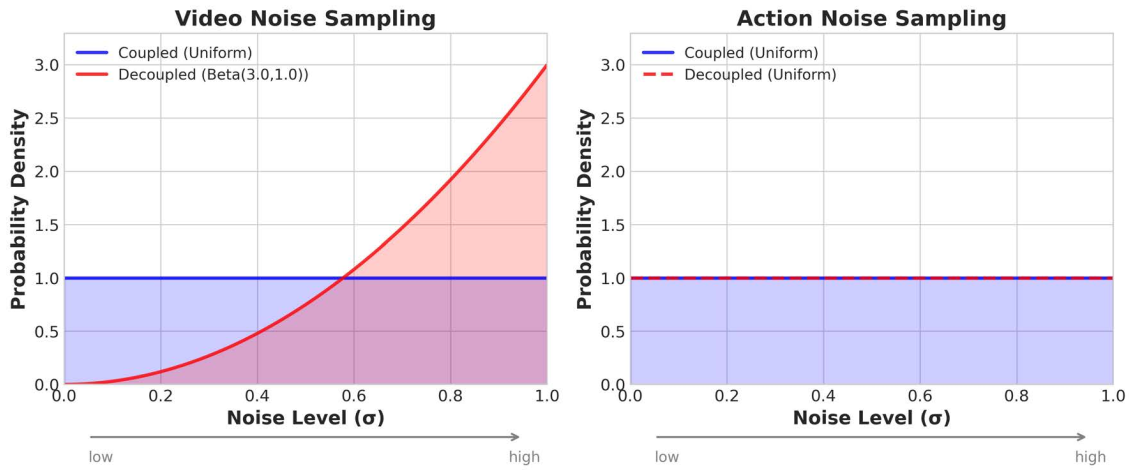
Problem: 4 denoising steps = 350ms (too slow for some applications)
Solution: Decoupled noise scheduling
Trains actions to denoise from predominantly noisy visual context.
Result
1-step: 74% task progress (only 9% drop from 4-step at 83%)
| Optimization | H100 | GB200 |
|---|---|---|
| Baseline | 1\times | 1.1\times |
| System-level | ||
| + CFG Parallelism | 1.9\times | 1.8\times |
| + DiT Caching | 5.5\times | 5.4\times |
| Implementation-level | ||
| + torch.compile | 8.9\times | 10.9\times |
| + Kernel & Scheduler | 9.6\times | 14.8\times |
| + Quantization | — | 16.6\times |
| Model-level | ||
| + DreamZero-Flash | — | 38\times |
Final: 14B at 7Hz on 2 \times \text{GB200} (150ms per chunk)
Counterintuitive Finding
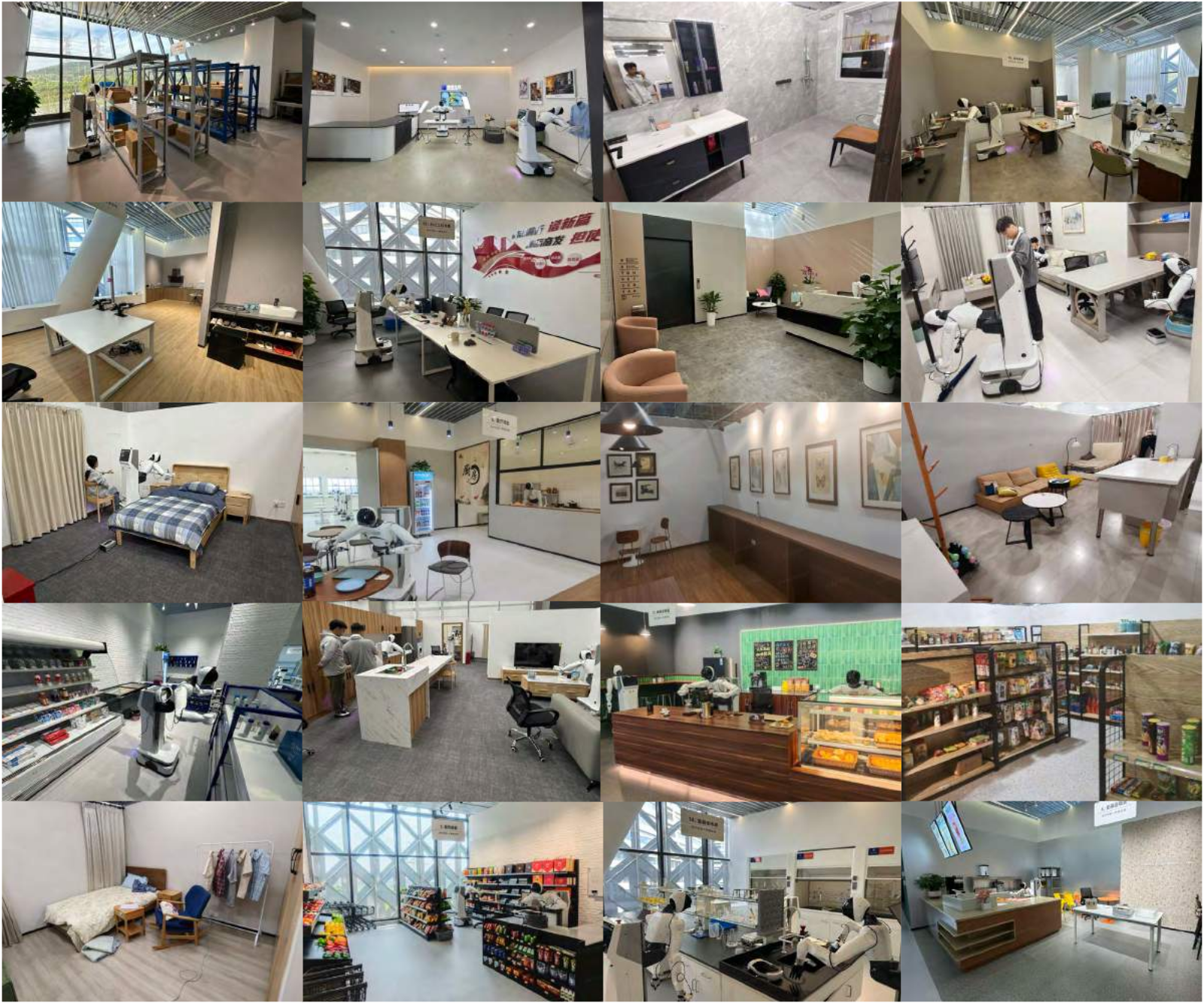
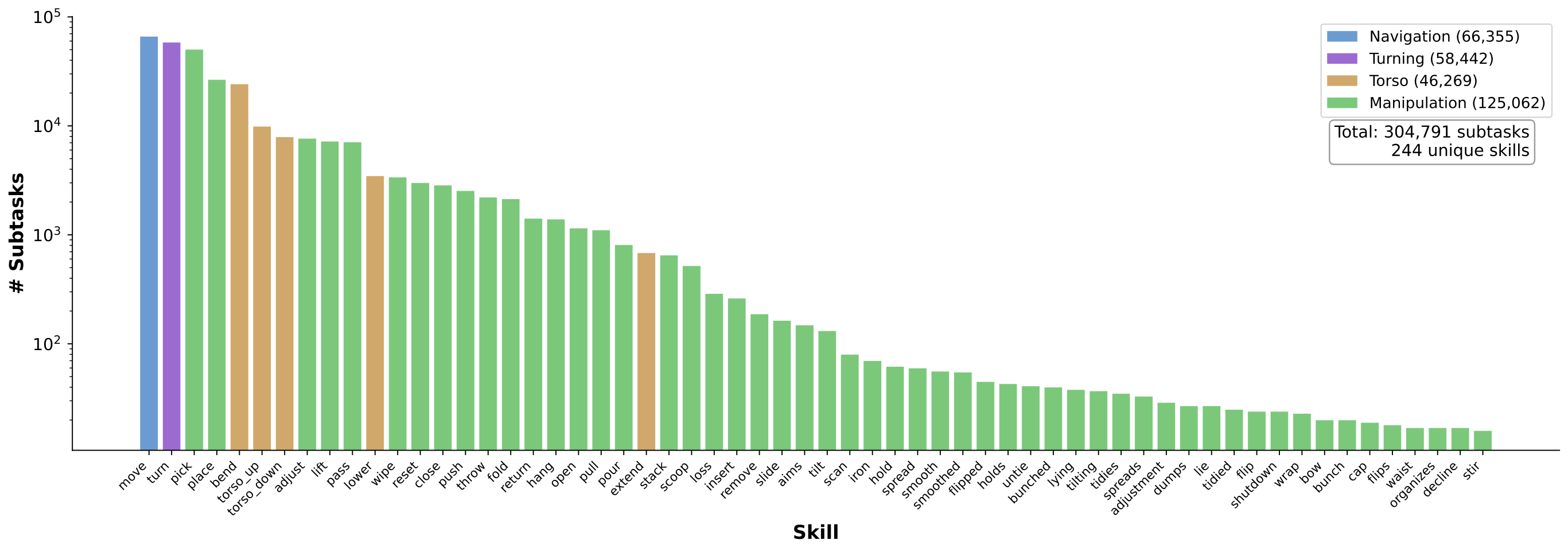
Same 500 hours of data: Diverse (22 envs, long-tail skills): 50% task progress Repetitive (70 tasks, many reps): 33% task progress \rightarrow +51% relative improvement from diversity
Why?
Data:
22 diverse environments
Training:
Skill distribution
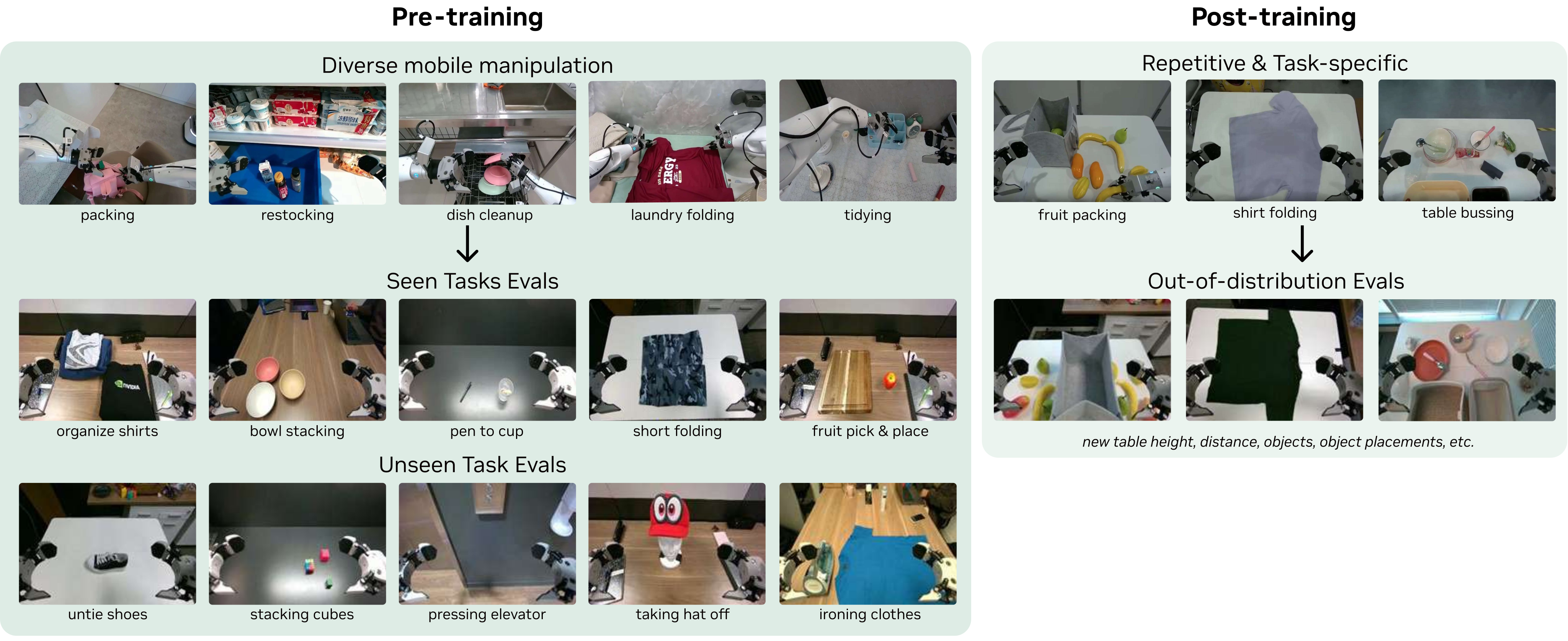
Default: unseen environments, unseen objects Training and evaluation in different geographic locations
True Out-of-Distribution
Experimental Results
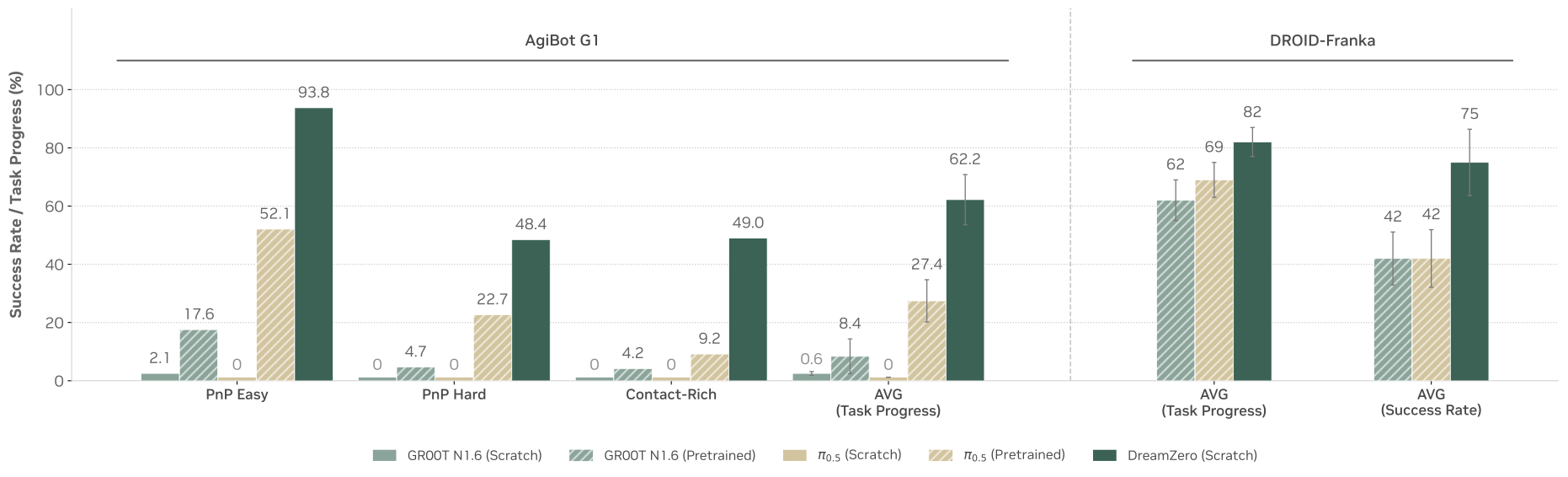
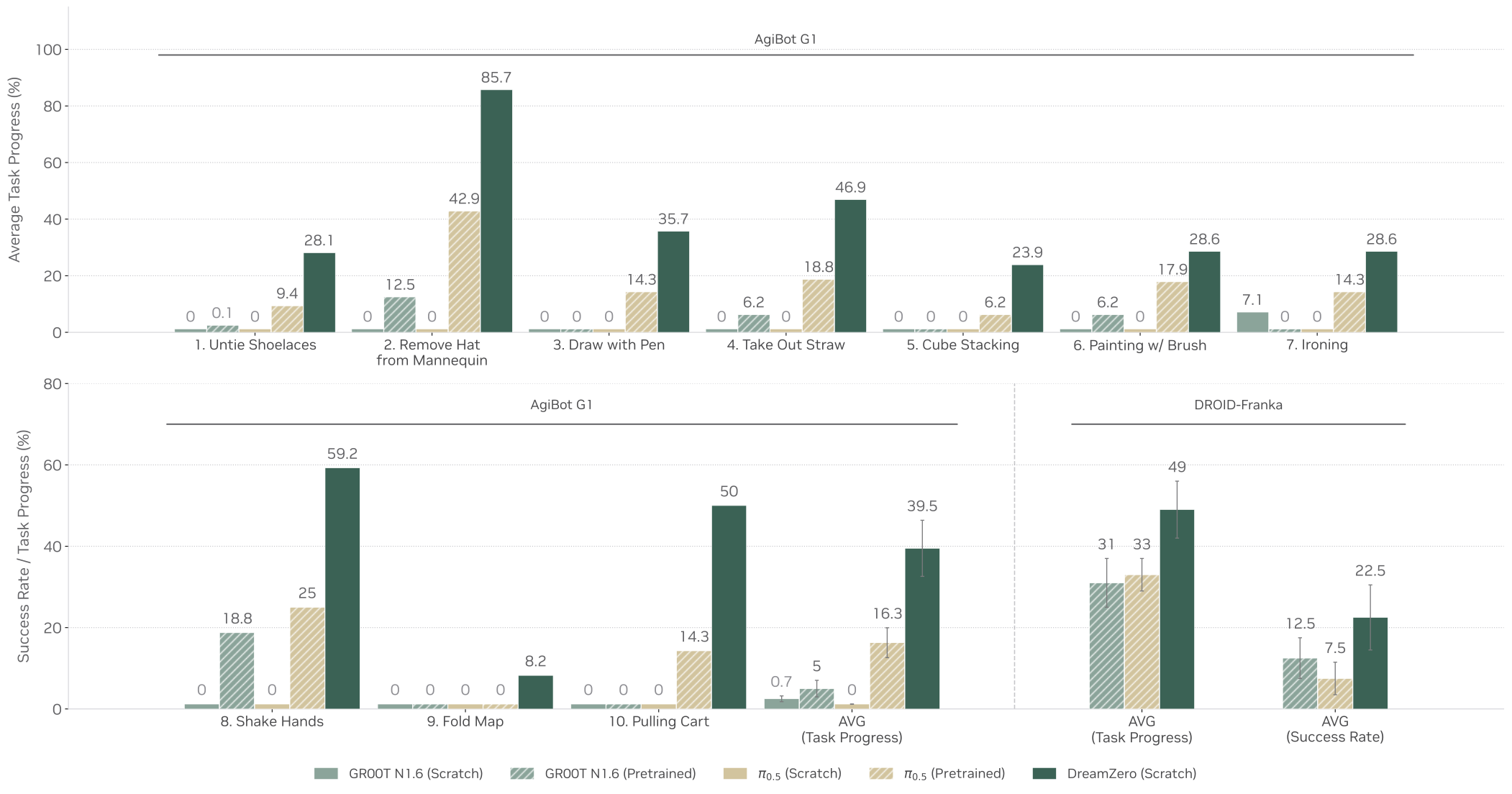
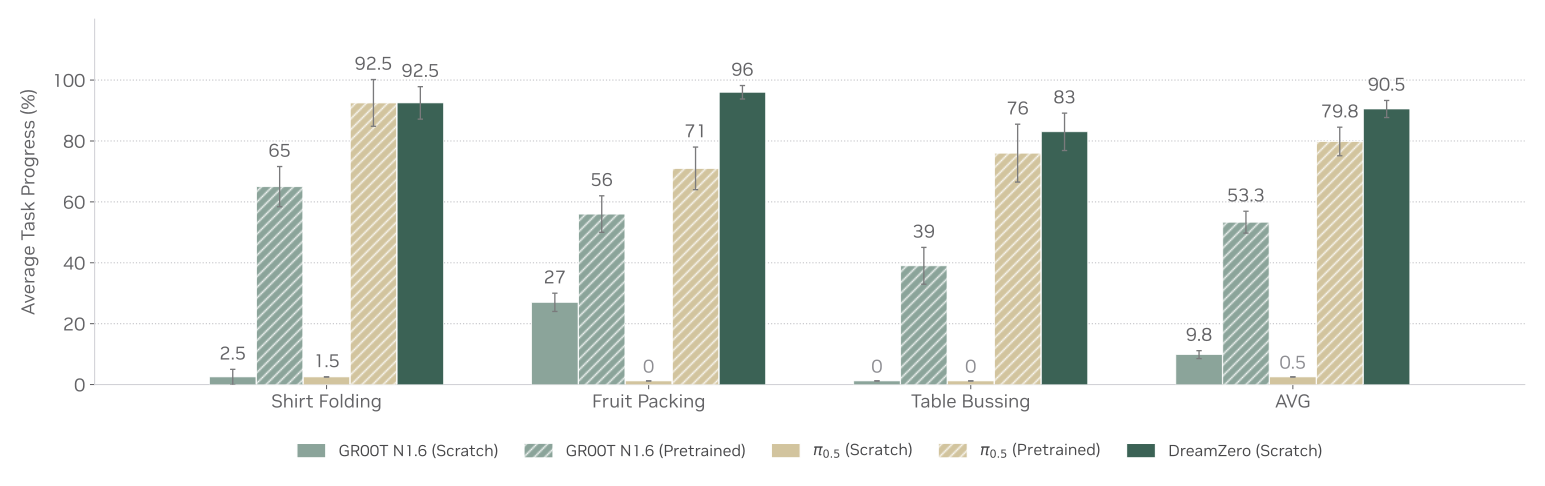
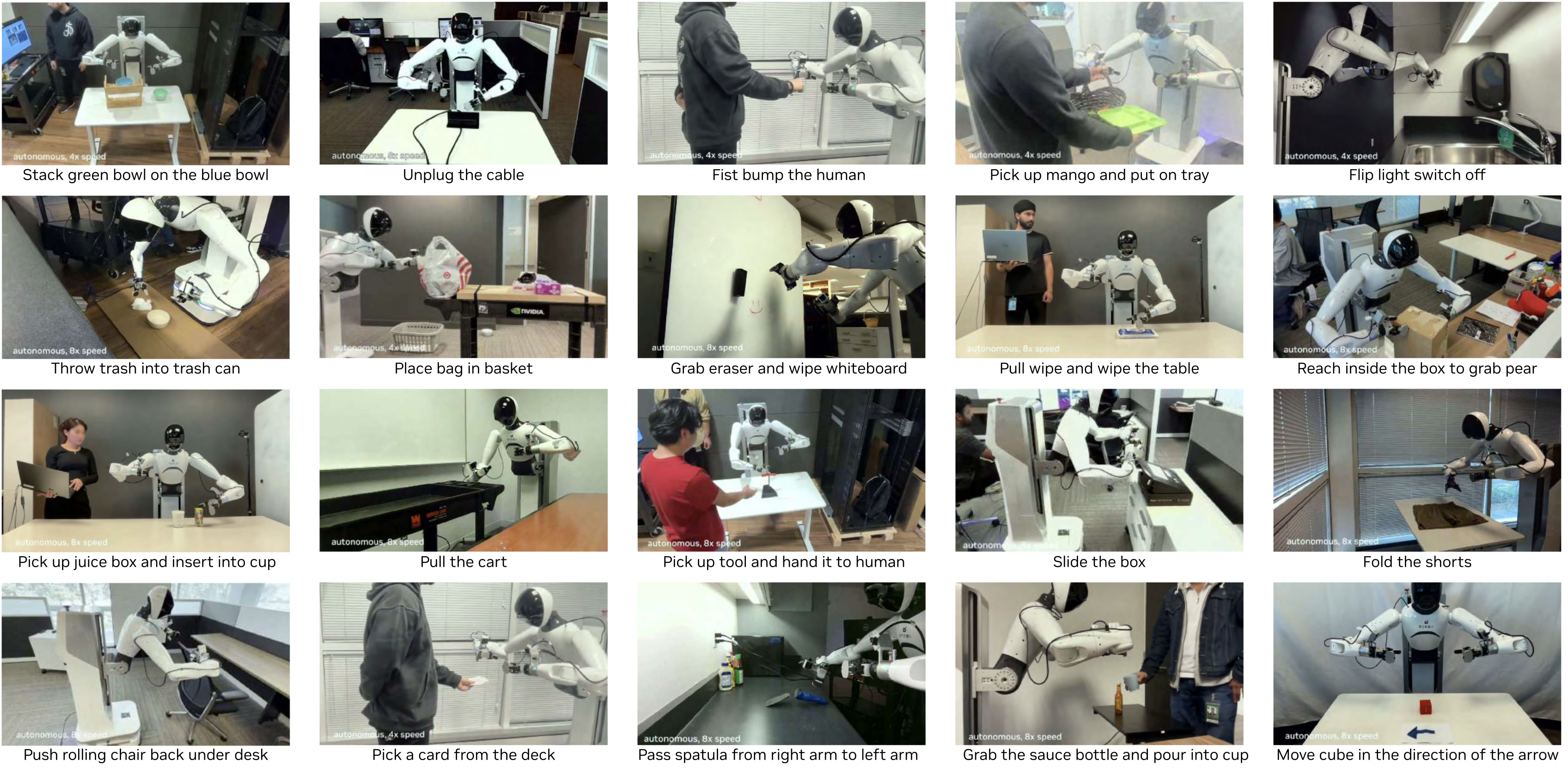
DreamZero: 62.2% avg. task progress Best VLA (pretrained): 27.4% \rightarrow 2.3\times VLA from-scratch: $$0%
DreamZero: 39.5% on novel tasks Best VLA (pretrained): 16.3% \rightarrow 2.4\times
Standout tasks:
VLAs overfit to pick-and-place regardless of instruction.
Untie Shoelace (Unseen)
Shake Hands (Unseen)
Commentary: The key result — DreamZero does things it was NEVER trained to do.
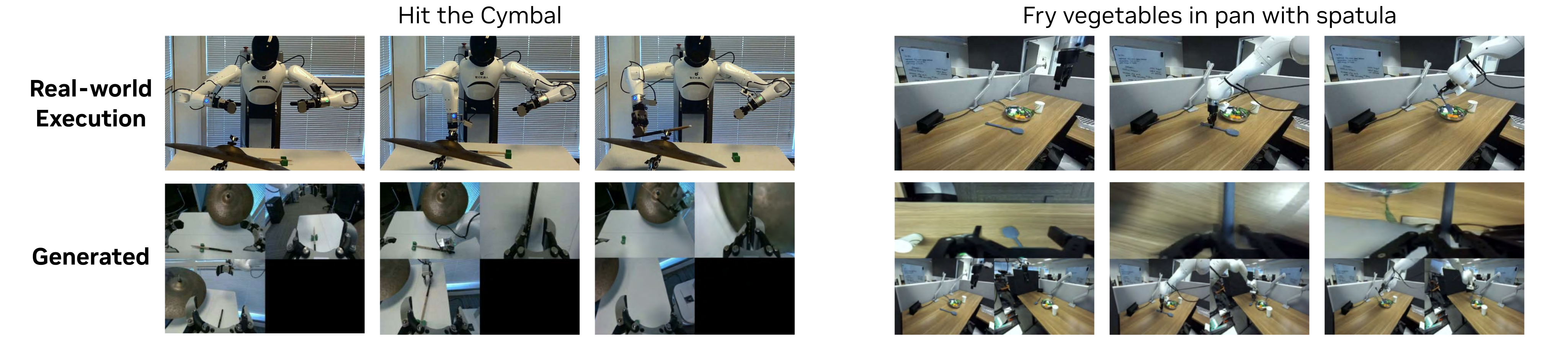
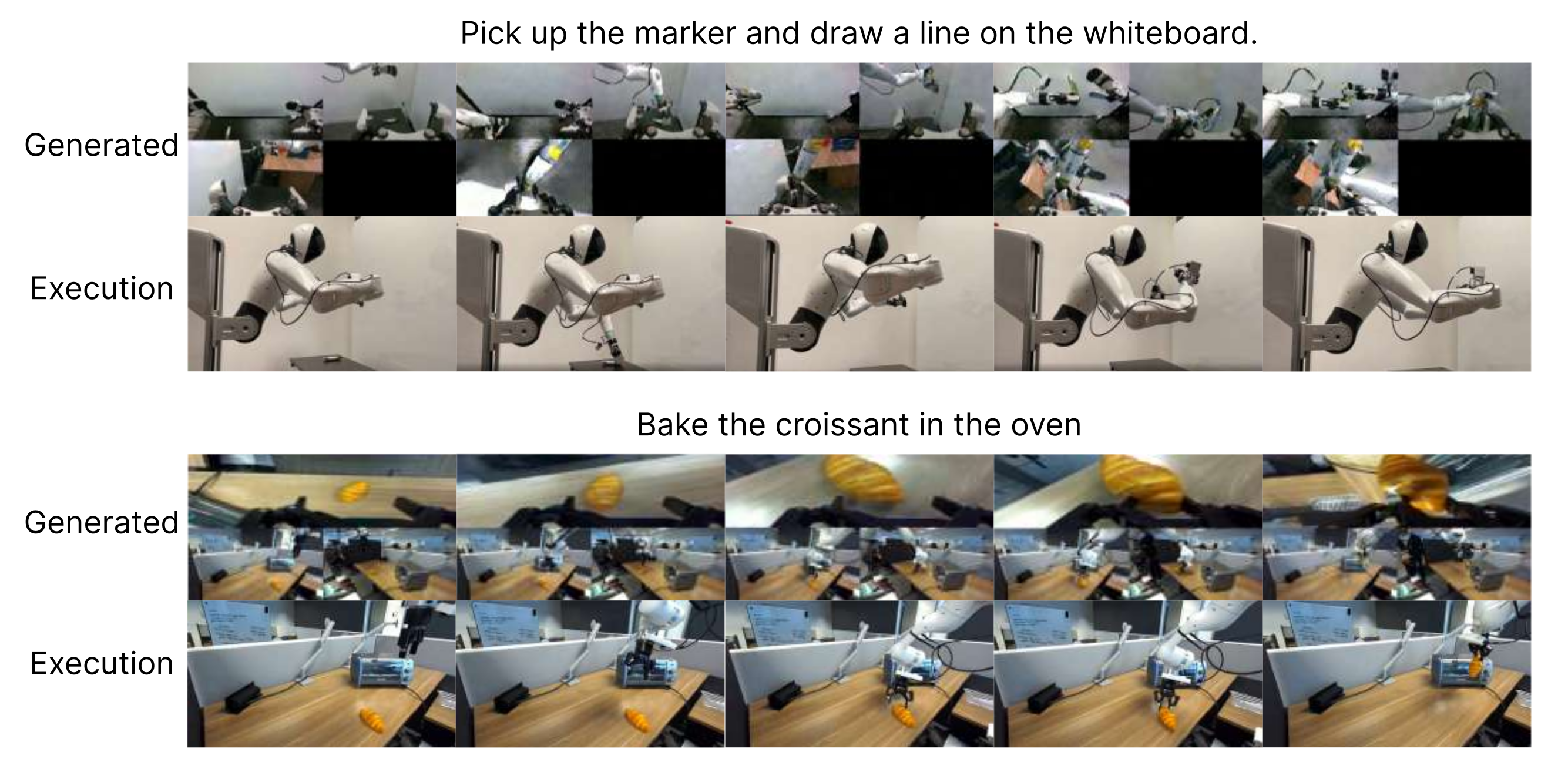
AI Prediction
Real Execution
| Method | Task Progress |
|---|---|
| DreamZero (baseline) | 38.3% |
| + Robot2Robot (YAM, 20 min) | 55.4% (+44.6% rel.) |
| + Human2Robot (12 min) | 54.3% (+41.8% rel.) |
DROID: AI Prediction
DROID: Real Execution
Commentary: Video-only data (no action labels!) opens a massive scaling pathway. YouTube hosts >800M hours of how-to video — the bottleneck shifts from “collect robot data” to “build a better IDM”.
Pick Teddy Bear
Orange to Pumpkin
100+ novel tasks via natural language instructions “Pop the balloon”, “Press elevator button”, “Paint”, “Iron clothes”
Water Plant
Open Door
Seen Tasks (10 evaluated):
take, place, push, open, pour
Unseen Tasks (10 evaluated):
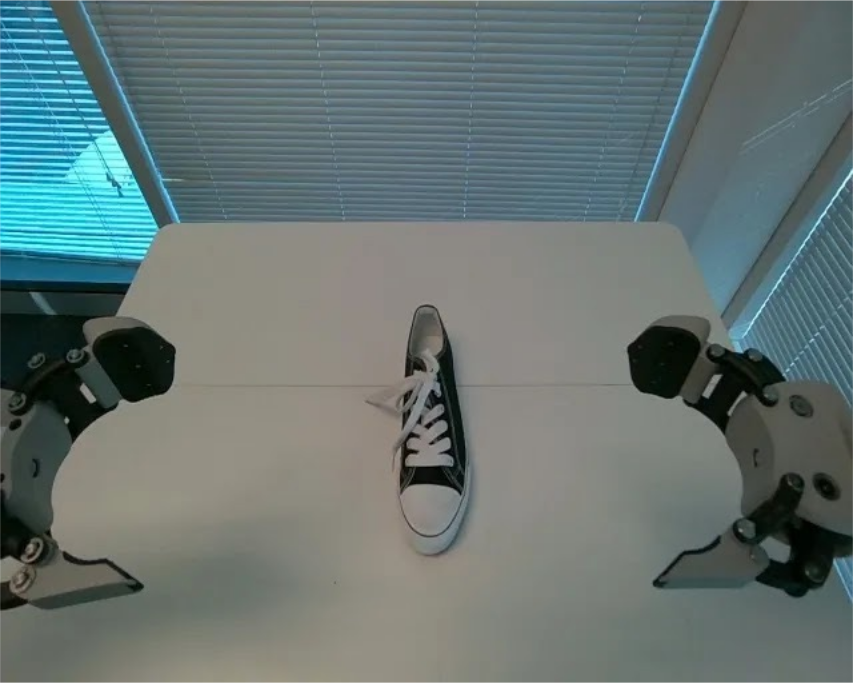
iron, untie, shake hands, remove hat
Full video gallery: dreamzero0.github.io
| Arch | Size | Data | Progress | |
|---|---|---|---|---|
| Q1. Data Diversity | ||||
| DZ (AR) | 14B | Repetitive | 33% | |
| DZ (AR) | 14B | Diverse | 50% | |
| Q2. Model Scale | ||||
| DZ (AR) | 5B | Diverse | 21% | |
| DZ (AR) | 14B | Diverse | 50% | |
| VLA | 5B | Diverse | 0% | |
| VLA | 14B | Diverse | 0% | |
| Q3. Architecture | ||||
| DZ (BD) | 14B | Diverse | 50% | |
| DZ (AR) | 14B | Diverse | 50% |
All on PnP Easy, 50K steps, batch 32. DZ = DreamZero.
VLAs:
WAMs:
Commentary: A fundamental architectural difference, not data/compute. VLMs encode semantics; video models encode physics. For robotics, physics wins. Expect hybrid approaches combining VLM semantics with WAM physics.
Error causal chain: Video backbone hallucinates \rightarrow wrong predicted frames \rightarrow IDM extracts actions from wrong video \rightarrow robot executes incorrect motion
Commentary: The tight coupling is both strength and weakness — video quality is the bottleneck.
Code-Level Insights
Key Code Patterns
CategorySpecificLinear: separate weights per embodimentMultiEmbodimentActionEncoder: category-specific MLPsCommentary (from code): Each robot gets its own “translator” while sharing the world model.
Production-Grade Engineering
Commentary (from code): Far beyond typical research code — production-grade systems engineering.
Data Infrastructure
Commentary (from code): Data infrastructure is as important as the model architecture.
Core Architecture
wan_video_dit_action_causal_chunk.pygroot/vla/model/dreamzero/Commentary (from code): DreamZero is not “video model + action decoder” — it is a single DiT that jointly denoises both modalities.
Discussion & Takeaways
From the paper:
Computational:
Long-horizon:
Adaptation is not free.
The credit card analogy:
IDM complexity scales with DOF:
Hardware Path
If humanoid actuators mature quickly \rightarrow embodiment matching eliminates transfer loss
Algorithm Path
If embodiment adaptation improves faster \rightarrow intermediate morphologies remain viable
We are back to the age of research — fundamentals matter again.
— Jim Fan, The Second Pre-training Paradigm (Fan 2026)
Both paths converge on the same data: human video
Strengths:
Missing:
Commentary: Current zero-shot is “AI Slop” phase (Jang 2026) — correct direction, but not deployment-ready yet.
Personal Assessment
The future of robotics is video-native, not language-native.
Key References:
Q&A