Ask anytime

Leave a question at any time.
https://app.wooclap.com/ZNQKOGF
More compute becomes affordable
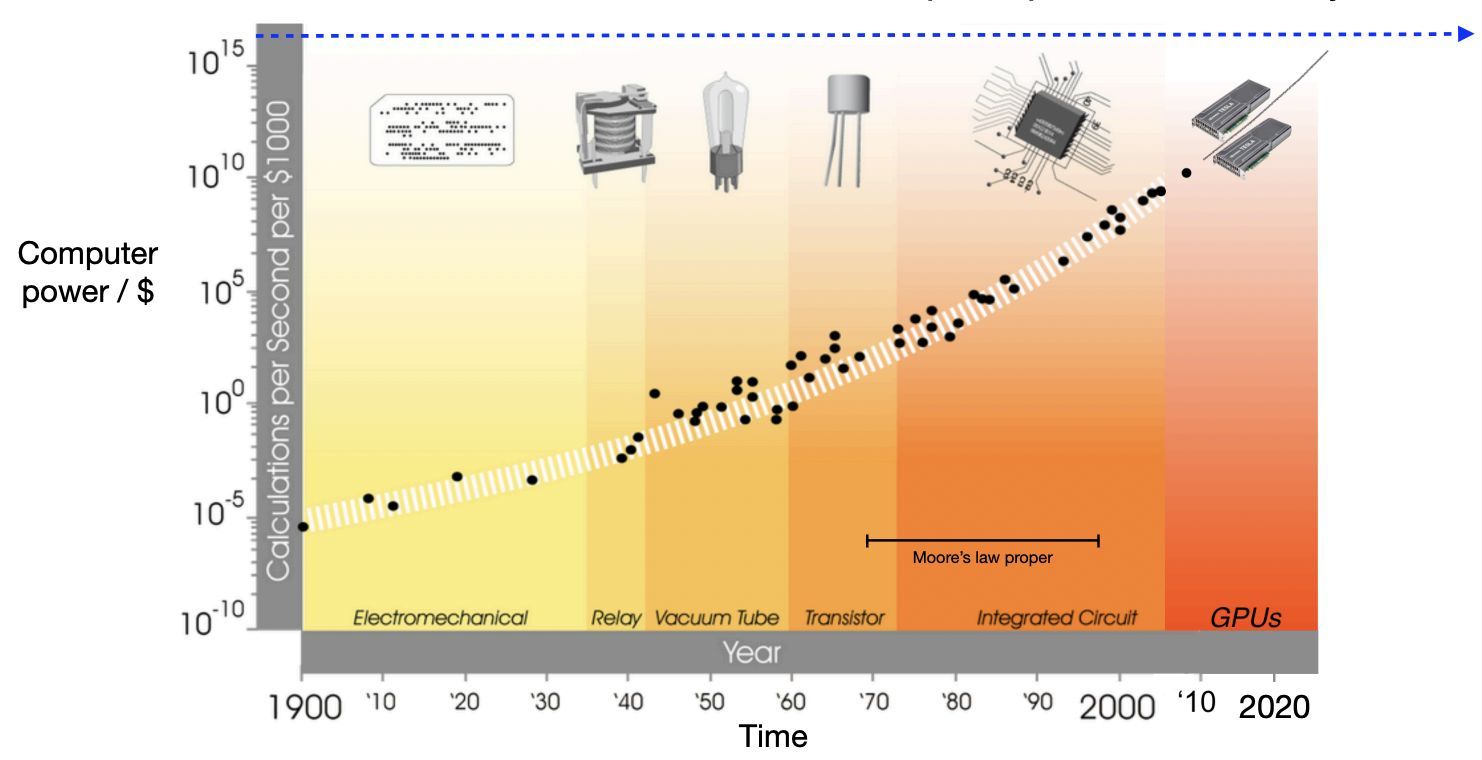
Original Hyung Won Chung, Stanford CS25 (2024), slide 7. Historical hardware cost/performance; qualitative takeaway follows.
GPU: Graphics Processing Unit, a processor for parallel computation.
Look, move, look again

Diagram after Stanford CS231n (2025), p29. Video: OpenVLA (2024), publisher’s 1.5x playback.
3. Who creates a robot’s experience?

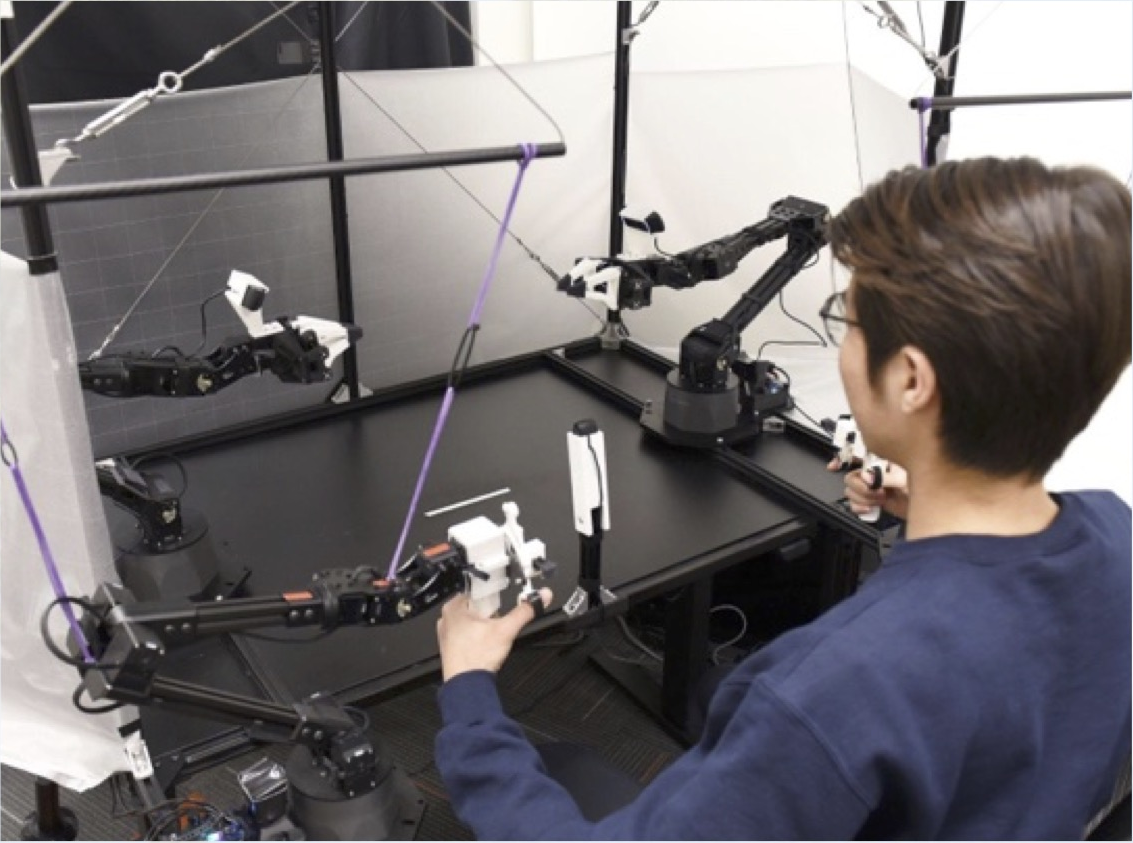
ALOHA: A Low-cost Open-source Hardware System for Bimanual Teleoperation.
Original Zhao et al., ALOHA (2023). Teleoperated · Real-time excerpt.
Hand motion becomes robot motion

Original ALOHA 2 (2024), teleoperated at 1x. Command/feedback diagram after ETH Real-World Robotics (2025).
UMI: Universal Manipulation Interface

Original Chi et al., UMI (2024), Fig2 and project demo. Photo enlarged with teaching callouts. Human-held tool video · Source playback speed.
Learn from the recording
Human-held tool
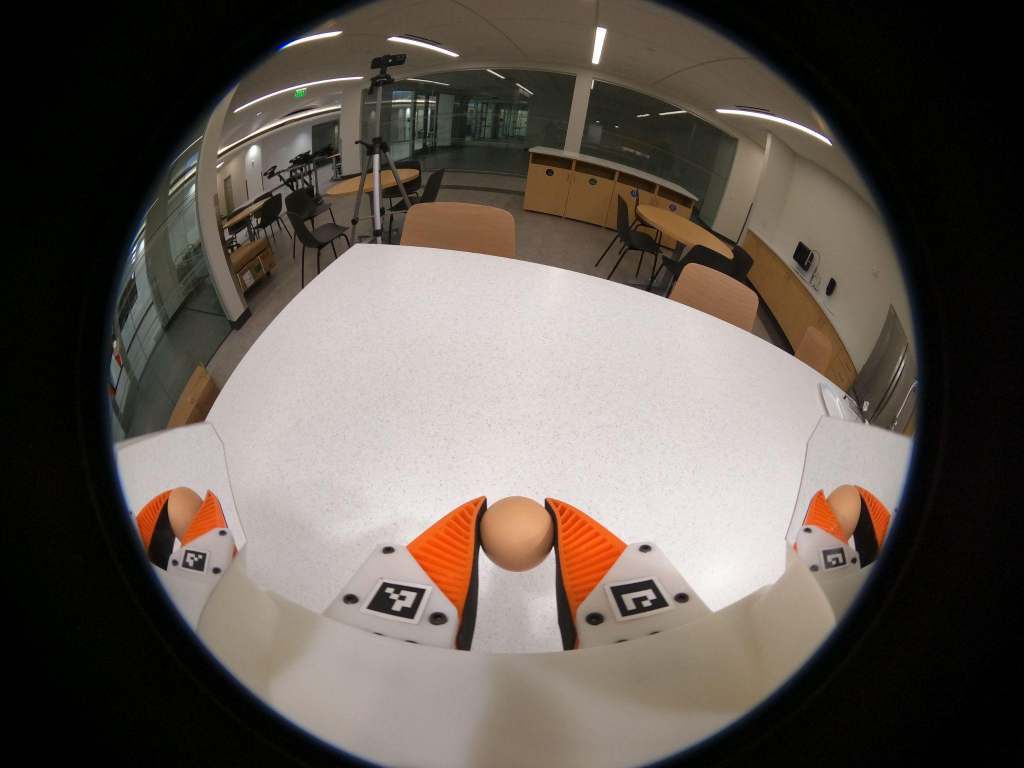
Robot
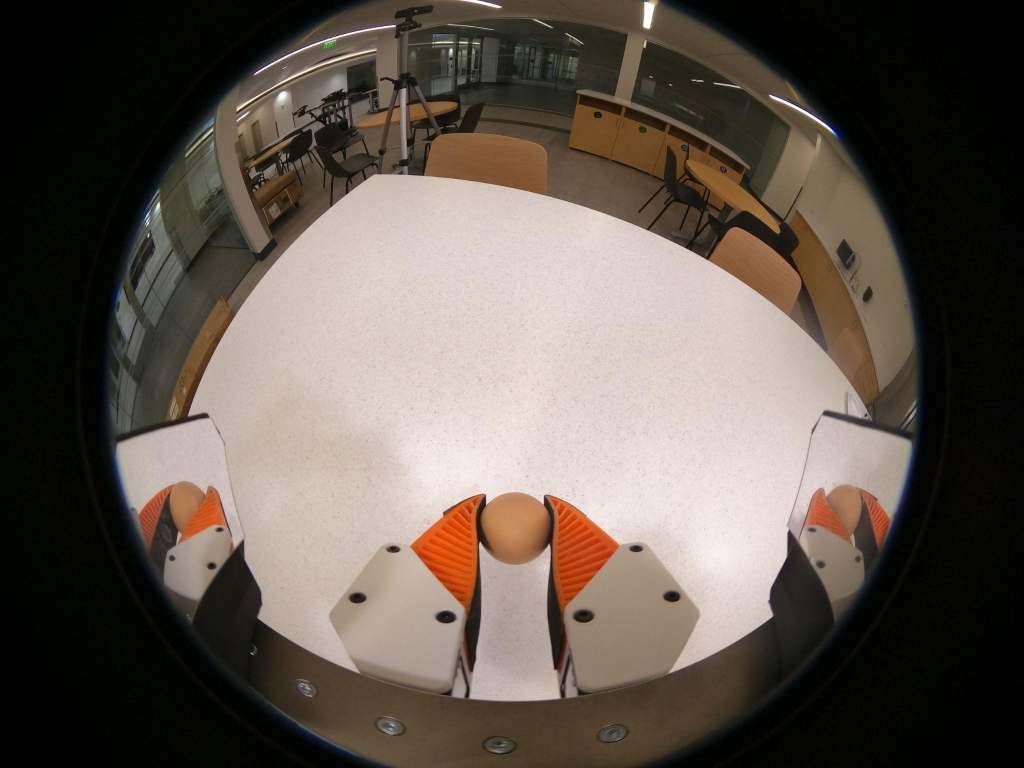
Sunday: Skill Capture Glove → Memo

Views: UMI (2024), Fig2. Video: Sunday Robotics (2025), two official excerpts. Human capture, then Memo; robot segment originally 5x.
More people, more places

Could people record without the gripper?
Original UMI project montage (2024). Human collection in three settings · Source playback speed.
4. Scaling with human video
Lecture route: 4 of 5
Learn from
text
Output
actions
Collect
examples
Scale with
people
More kinds
of video
We can record demonstrations with robots and tools.
Could human activity give us much more data?
Egocentric video = first-person view

Lecture route: 4 of 5
Learn from
text
Output
actions
Collect
examples
Scale with
people
More kinds
of video
Human activity is already being recorded.
How much experience could human video provide?
Video by Sergi Coffee (YouTube). CC BY 4.0, creator-linked master; 8-second muted excerpt.
4. Learning from human activity
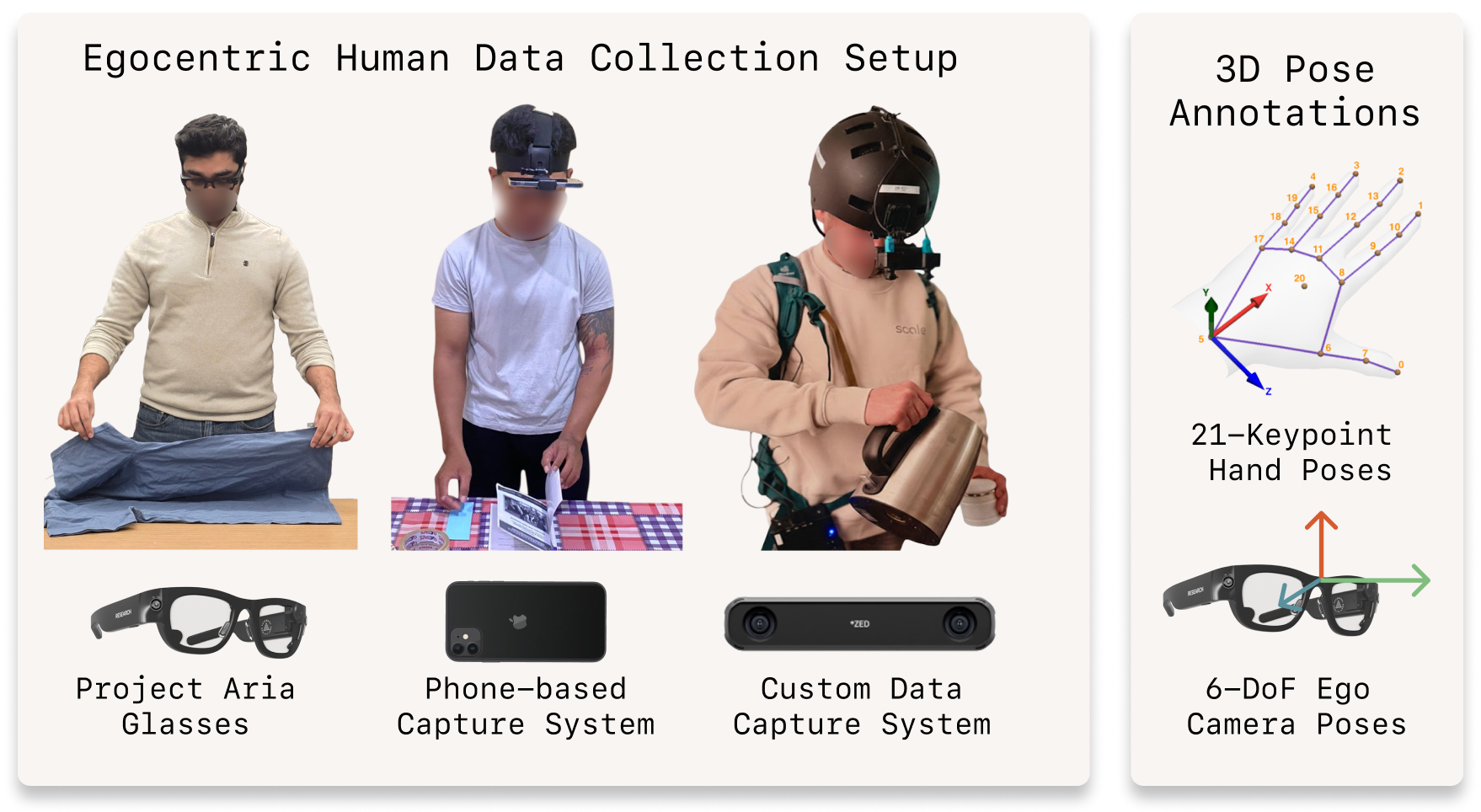
Original Punamiya et al., EgoVerse (2026), capture setup. Also discussed by Danfei Xu, Stanford ENGR319 (2026).
What a human record contains

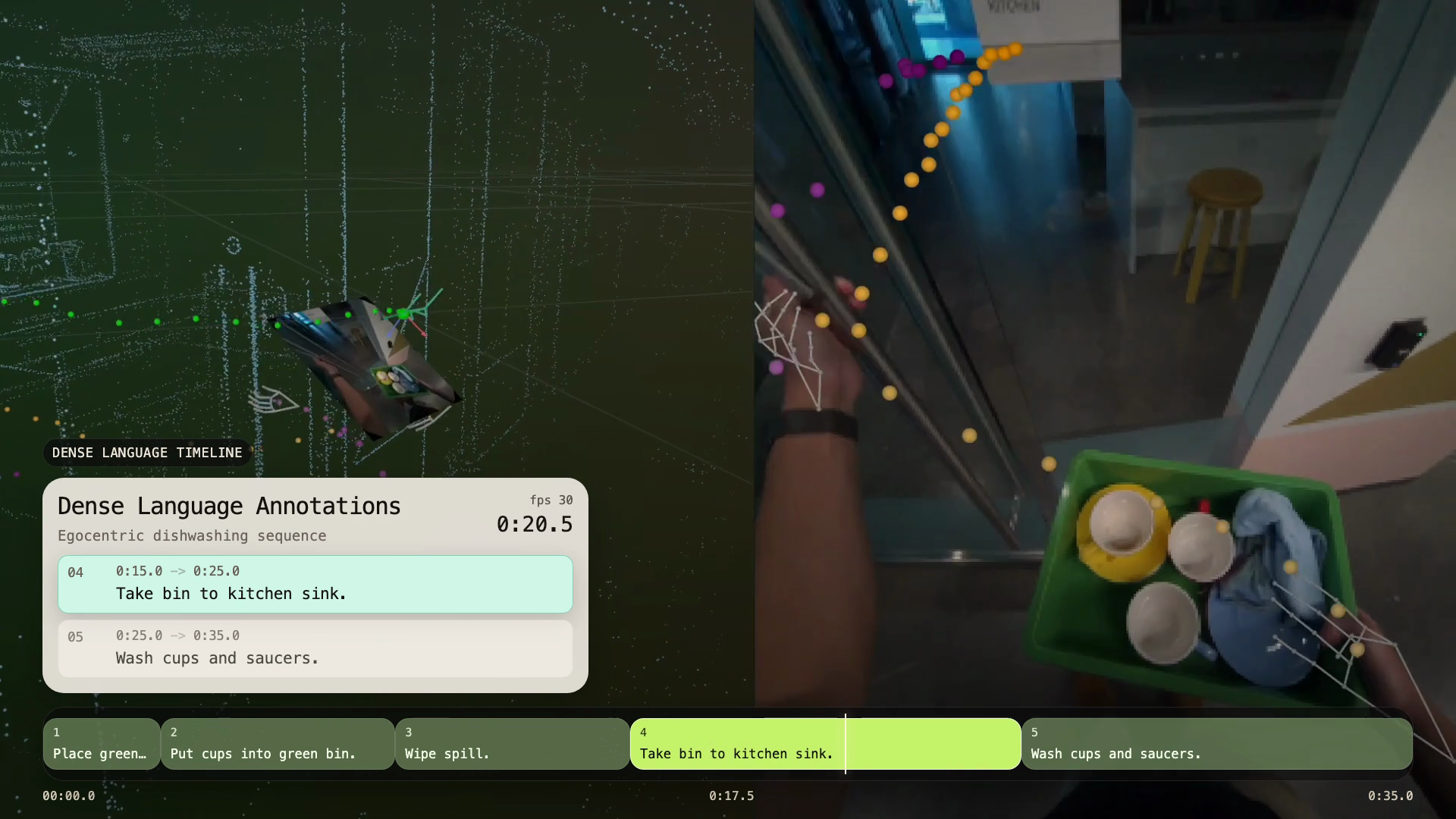
Video · Movement estimates · Task annotation
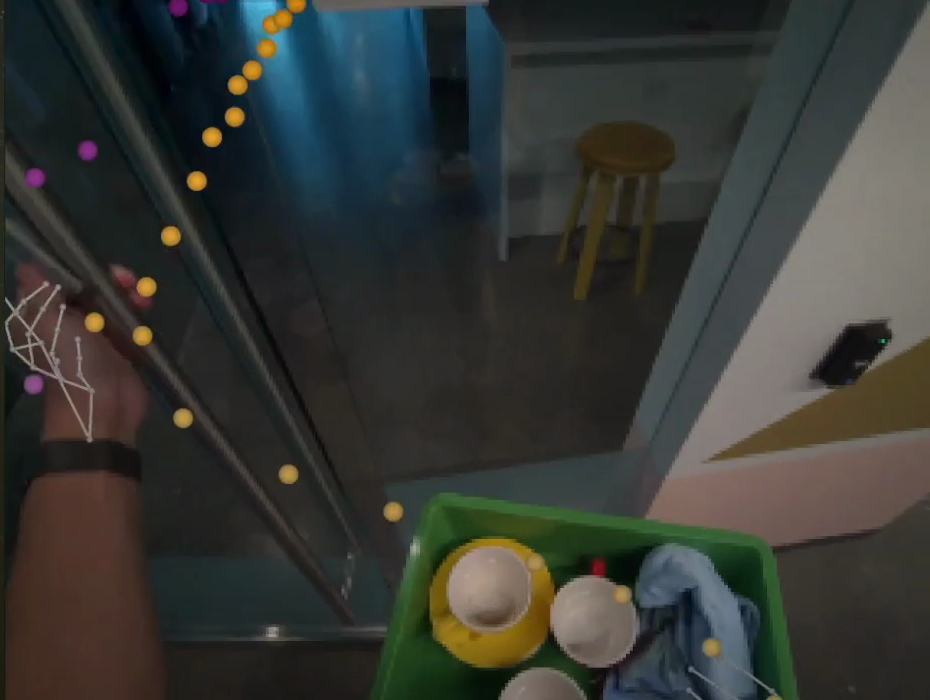
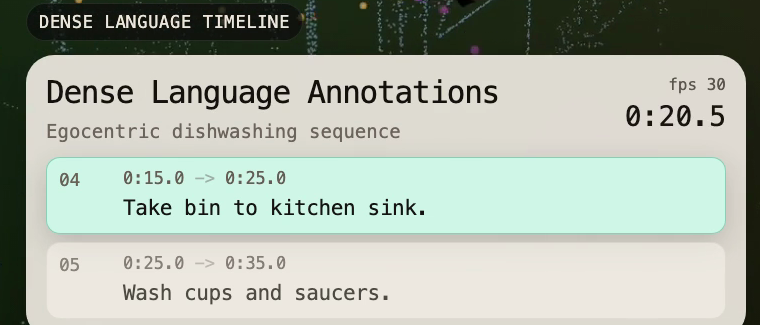
Original EgoVerse annotation demo (2026). Human demonstration · Source playback speed.
A public data program at this scale

EgoSuite-Open100K announcement, August 26, 2026. Human recordings at source playback speed. Staged access; current total not verified.
Generalist: a growing data foundation
Human demonstration

Robot execution

Original Generalist GEN-1.5 demos (2026). 500,000+h belongs to GEN-1, Apr 2. Source playback speed; robot autonomy claimed.
Dyna-2: a million hours of human video

Original Dyna-2 (2026), Figure 4: human pretraining footage, source playback speed. Robot-data training follows.